

Summary
The collaboration between Virtina and Conex Depot highlights the power of targeted, expert-driven solutions to overcome complex technical challenges.
By implementing WooCommerce HPOS and customizing it to fit Conex Depot’s unique needs, Virtina transformed a slow and inefficient CRM system into a high-performance tool that supports the company’s growth and operational goals.
Enter your text here...
Optimizing Customer Relationship Management (CRM) performance is a strategic move that significantly fosters everlasting customer loyalty and drives revenue growth for your business.
Deploying an effective CRM at an eCommerce store enables you to manage customer data and behavior. Using a CRM in an eCommerce store helps personalize marketing, improve the customer experience, and optimize the sales process.
While optimizing a CRM is crucial for boosting a business's operational efficiency, it can be challenging to do it correctly.
Our client, Conex Depot, a leading online retailer of containers and storage solutions, encountered a big challenge with its WooCommerce CRM system, which began to slow down as its customer base expanded.
Knowing the need for expert intervention, Conex Depot turned to Virtina, a premier WooCommerce solutions provider, to address these critical performance issues.
This case study details how Virtina, with its problem-solving skills and expertise, identified the root cause of Conex Depot's CRM performance issues and successfully implemented a customized solution. This accomplishment inspires confidence in Virtina's ability to handle similar challenges.
Table of Contents
Overview Of The Challenge And Its Impact
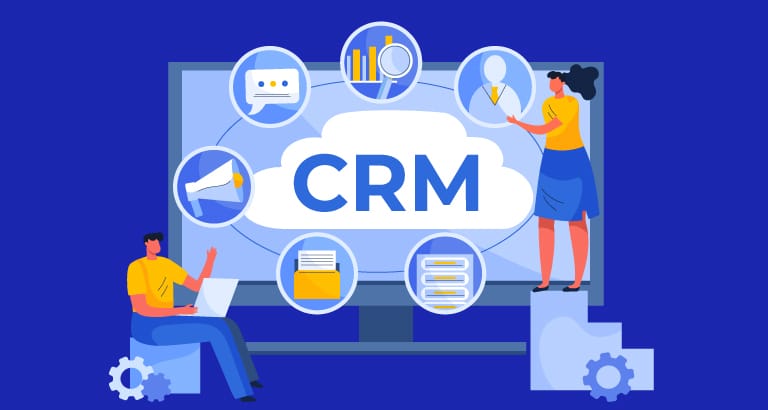
As the business scaled, so did the size and complexity of the WooCommerce CRM database at Conex Depot.
By the time the system had loaded up to more than 66,000 leads in the CRM, it started to take some real hits on the load times, especially when searching for a lead with their phone number, email, or name.
As their sales teams and customer service reps constantly used the CRM to look up customer information and track interactions, delays in the retrieval process resulted in inefficiency, longer response times, and lower customer satisfaction.
Moreover, with the company still growing, there was a nagging fear that these issues would only worsen with increased leads and transactions.
Initial Attempts To Address The Problem

Before approaching Virtina, Conex Depot had made several attempts to optimize its CRM system by trying traditional methods such as database indexing, query optimization, and implementing caching strategies.
While these efforts provided temporary relief, the performance issues persisted, especially during peak operational periods. That necessitated a clear call that required deeper solutions if the root cause of their problems was to be effectively addressed.
Upon analyzing the situation, Virtina proposed a solution centered around WooCommerce High-Performance Object Search (HPOS).
HPOS is designed to optimize data retrieval within WooCommerce environments, making it an ideal solution for businesses experiencing performance bottlenecks due to large datasets.
But why HPOS?
HPOS significantly improves how WooCommerce manages and searches through data.
It restructures how queries are handled, allowing faster and more efficient information retrieval, particularly in environments with large volumes of data like Conex Depot’s CRM.
This solution was expected to address the slow loading times directly, enhancing the system's overall performance and responsiveness.
Implementation Process

Virtina’s implementation of WooCommerce HPOS for Conex Depot was well-planned and meticulously executed.
The goal was to enhance the system's performance without losing the functionalities or customizations developed within it.
1. System Analysis and Planning
Virtina began with a comprehensive analysis of Conex Depot’s CRM system.
This involved reviewing the existing architecture, identifying the specific queries and processes causing the slowdowns, and mapping out all customizations that had been added to the system over time.
This thorough understanding of the current setup was crucial in planning a smooth transition to HPOS.
2. Setting Up A Staging Environment
Before implementing any changes to the live CRM system, we created a staging environment that replicated Conex Depot’s current setup to deploy WooCommerce HPOS in a controlled environment.
This allowed them to test the impact on performance and identify compatibility issues with the custom features that Conex Depot relied on.
3. Addressing Compatibility Challenges
While WooCommerce HPOS offered significant performance improvements, it introduced new challenges related to compatibility with Conex Depot’s customized CRM features.
Some key customizations that initially encountered issues included -
4. Custom Coding and Integration
To resolve these compatibility issues, Virtina’s developers undertook extensive custom coding.
This involved:
These changes were rigorously tested in the staging environment to ensure they provided the desired functionality without introducing new issues.
5. Rolling Out The Changes
Once all compatibility issues were resolved and HPOS's performance was validated in the staging environment, Virtina rolled out the solution to Conex Depot’s live CRM system.
This was done during a scheduled maintenance period to minimize disruption to Conex Depot’s operations. Post-implementation, Virtina closely monitored the system to ensure everything functioned as expected and provided immediate support to address any issues.
Results And Performance Improvements

Implementing WooCommerce HPOS by Virtina significantly improved Conex Depot’s CRM performance.
The changes were evident almost immediately after the roll-out, with the system showing marked improvements in speed, reliability, and overall user experience.
Drastic Reduction In Load Times
One of the most noticeable improvements was the drastic reduction in search times. The previously sluggish system took several seconds to retrieve customer data, and now searches are performed almost instantaneously.
This directly enhanced the effectiveness of the sales and customer service teams at Conex Depot by allowing them to respond more quickly and accurately to customer inquiries.
Enhanced System Stability And Scalability
The optimization of data retrieval processes also contributed to greater system stability.
The CRM handled large volumes of data more effectively, reducing the risk of crashes or slowdowns during peak usage times.
Moreover, the improvements have made the system further scalable, meaning that as Conex Depot continued to grow, its CRM could support increasing numbers of leads and transactions without performance degradation.
Improved User Experience And Productivity
With the CRM system running smoothly now, the staff at Conex Depot reported improvement in most of their day-to-day operations.
The faster, more responsive system allowed them to focus more on customer interactions and less on dealing with technical issues. This improved employee satisfaction and overall customer service, as queries were handled more swiftly and efficiently.
User Feedback And Adoption
The transition to the optimized WooCommerce CRM system was met with positive feedback from Conex Depot’s team.
Virtina’s approach ensured the system remained user-friendly despite the changes crucial for maintaining productivity during and after the transition.
Training And Support Provided By Virtina
Virtina provided training sessions for Conex Depot’s staff to ensure a smooth adoption of the new system.
These sessions focused on familiarizing users with workflow changes and demonstrating how to utilize the improved system capabilities fully.
Virtina also provided continued support to address any questions or issues arising after implementation so that Conex Depot could continue doing business uninterrupted.
Continuous Improvement And Monitoring
Virtina did not consider the project complete with the rollout of HPOS. Instead, they committed to continuous monitoring of the CRM’s performance.
They scheduled regular check-ins to review how the system was operating and to make further changes as needed.
This proactive approach ensured that improvements would be sustained over the long term and any emerging issues could be promptly addressed.